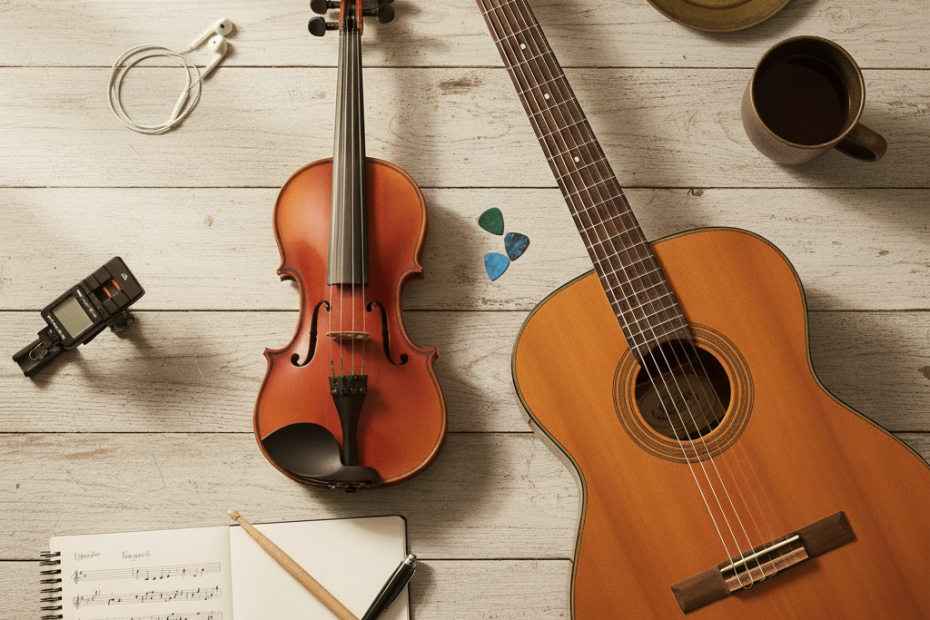
Learning one instrument is hard enough. Learning two, three, or even four at the same time can feel impossible if you don’t have a plan. But with the right kind of music practice routine, you can actually improve faster, stay motivated, and enjoy the process more (even if you’re busy with school, rehearsals, friends, and everything else in your life).
The good news? You don’t need to practice for hours a day, at least not if you’re a beginner at your instruments (like me). Practice time depends on skill level, interest, and the amount of time you decide to invest into learning these instruments. You don’t even need a full-size music studio or fancy equipment either. You just need a music practice routine that fits who you are, what you want, and how your brain learns.
Today I’m breaking down a complete guide to building a successful practice routine when you’re learning multiple instruments. This post is long, honest, and packed with strategy. If you’re a teen musician like me (or a parent of one), you’ll walk away knowing exactly what to do next.
Why Learning Multiple Instruments Feels Harder Than It Actually Is
Most people assume learning more than one instrument at a time is overwhelming. And yeah, it can be, especially when:
- You don’t have a predictable music practice routine
- You jump into practice sessions with no goal
- You compare your progress across instruments
- You’re still figuring out your identity as a growing musician
But here’s the part no one talks about:
Learning multiple instruments actually makes you a stronger musician overall.
It improves your rhythm, pitch awareness, listening skills, creativity, discipline, and confidence. Understanding violin helps you understand guitar. Guitar makes rhythm instruments easier. Drums help your timing on every single instrument you ever pick up.
So the challenge isn’t learning multiple instruments.
The challenge is building a music practice routine that keeps you improving without burning out.
That’s what this guide is for.
Tip 1: Choose Your “Primary” and “Secondary” Instruments
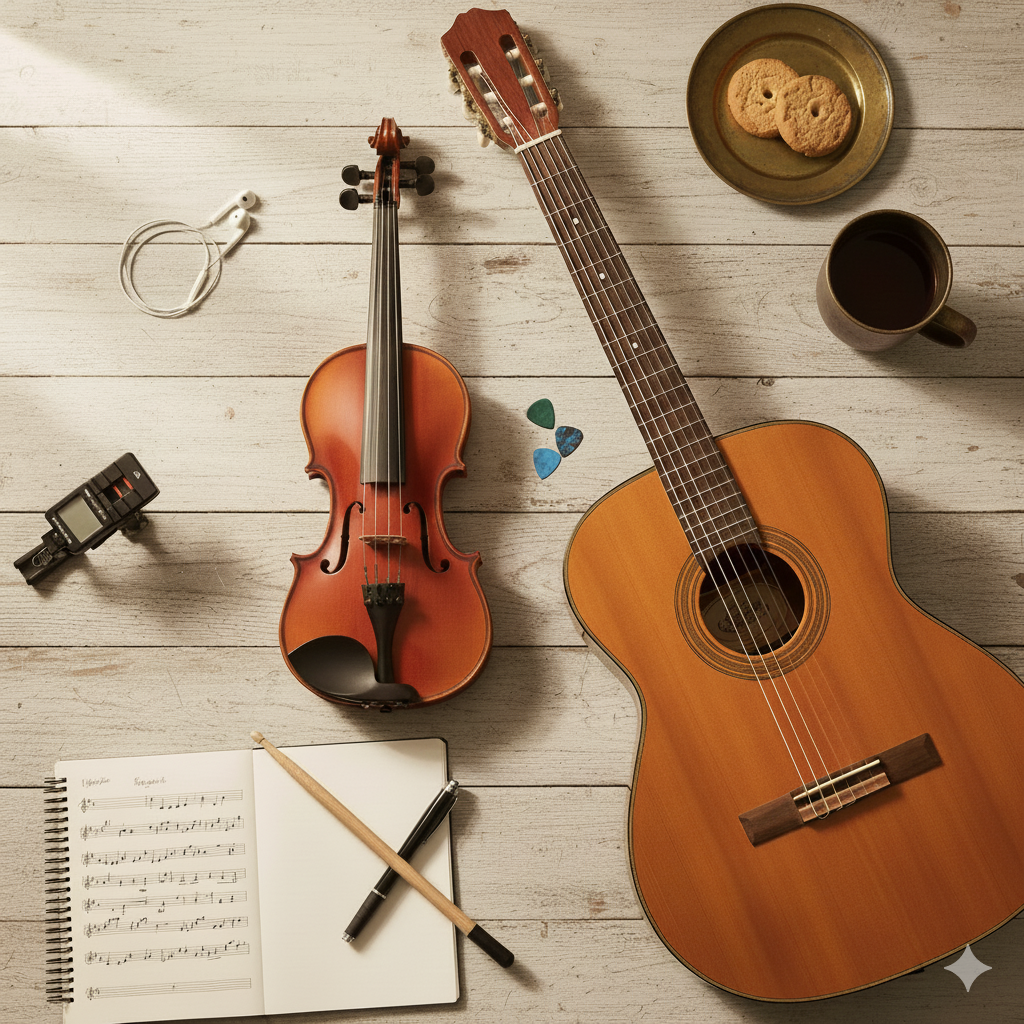
This isn’t about picking favorites, it’s about organizing your brain. When you’re learning multiple instruments, you should always have:
- One Primary Instrument
This is the instrument you want to progress on fastest (this has always been violin for me). - One or Two Secondary Instruments
These are instruments you’re learning more casually or experimentally (I play guitar, drums, and bass).
Why does this matter? Because if you try to improve everything equally, you’ll feel unfocused and stressed. A primary instrument gives your music practice routine an anchor. Everything else becomes bonus growth, not pressure.
Ask yourself:
- Which instrument matters most to my goals?
- Which one has the most upcoming performances or auditions?
- Which one do I want to build long-term mastery in?
That’s your primary instrument, and everything else gets flexible structure around it.
Tip 2: Set One Goal Per Instrument for the Month
Most beginners (and honestly, a lot of advanced musicians too) make the same mistake: setting goals that are too vague. Goals like “get better,” “practice more,” or “learn new songs” don’t help. You should try clear, measurable goals instead:
Example Monthly Goals:
Violin (Primary):
Master the shifting in my recital piece and get my bow hold more relaxed.
Guitar (Secondary):
Learn five clean major/minor chord transitions.
Drums (Secondary):
Build a steady quarter-note groove at a slow tempo.
These goals are specific enough to guide your practice but flexible enough to fit into a busy teen schedule. And once you know your monthly goals, your daily or weekly music practice routine writes itself.
Tip 3: Use the “20/10/5 Method”
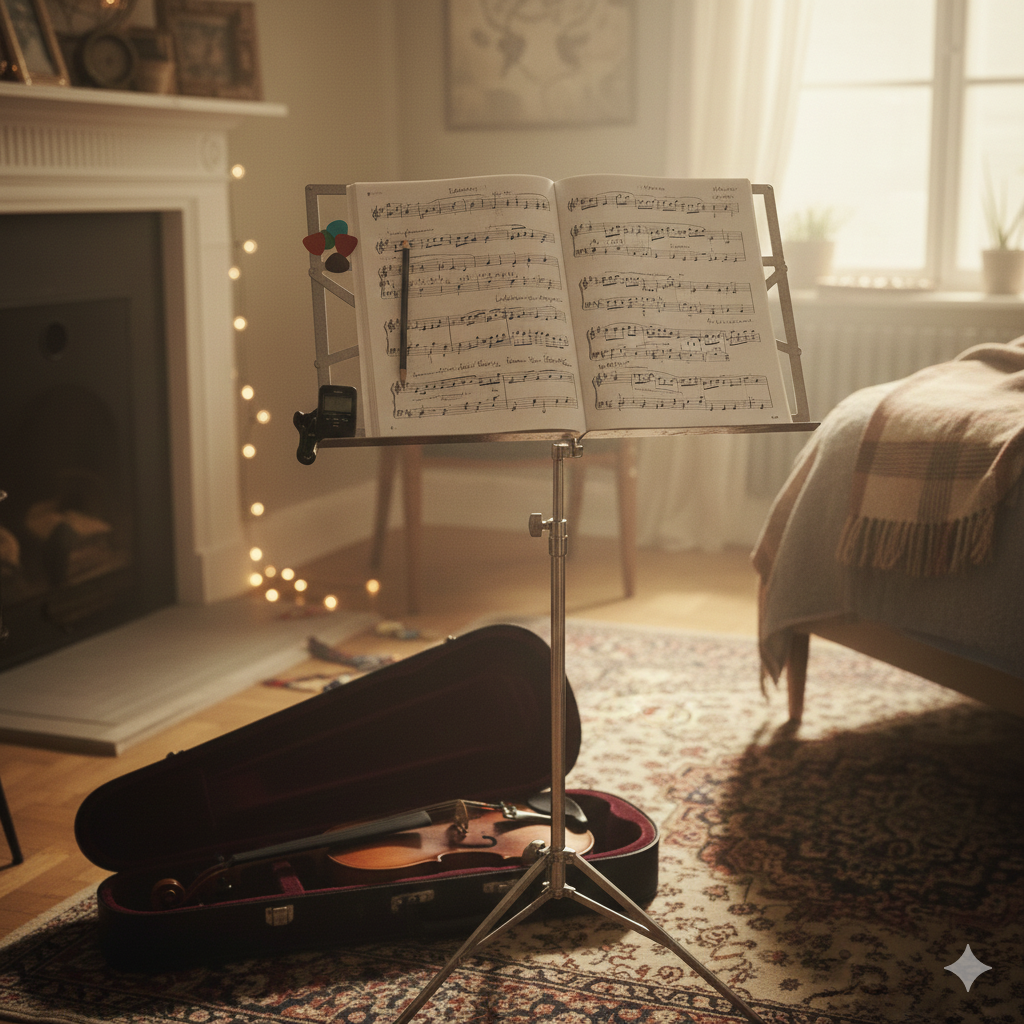
You don’t need three hours of practice per day to grow. You just need structured time. Here’s a simple method that could work for busy beginner students needing a multi instrument practice routine to get done all in one go (a suggestion, not the only way to practice):
20 minutes → Primary Instrument
10 minutes → Secondary Instrument 1
5 minutes → Secondary Instrument 2
Why it works:
- It keeps your progress steady on your main instrument
- It still allows exploration
- It avoids burnout
- It fits into a 35-minute window
- It trains your brain to switch efficiently between tasks
If you only have 20 minutes total, skip the secondaries. If you have more time, double the blocks. The system adapts to whatever schedule you have.
Tip 4: Proper Warm Ups and Equipment
The proper practice session starts with the proper warm up and equipment. If you’ve ever skipped warm-ups before practicing any instrument because you’re short on time, you’re not alone. But warm-ups save more time than they take. Warm-ups:
- Reduce injury risk
- Improve accuracy in playing
- Make the rest of practice easier
- Help your brain switch into “music mode”
You do not need a long warm-up for each instrument. This simple version could work for all:
- 1 minute: Loosen wrists, neck, shoulders
- 2 minutes: Slow scales or patterns
- 2 minutes: A technique relevant to your instrument
(bow control, fingerpicking, stick control, etc.)
Don’t forget to get the proper equipment for each instrument you decide to learn either. The correct technique, routine, and ultimate skill starts with the right materials (whether that be should rests, rosin, capos, picks, amps, pedals, drum sticks, headphones, etc.)
Tip 5: Learn to Switch Instruments Without Losing Focus
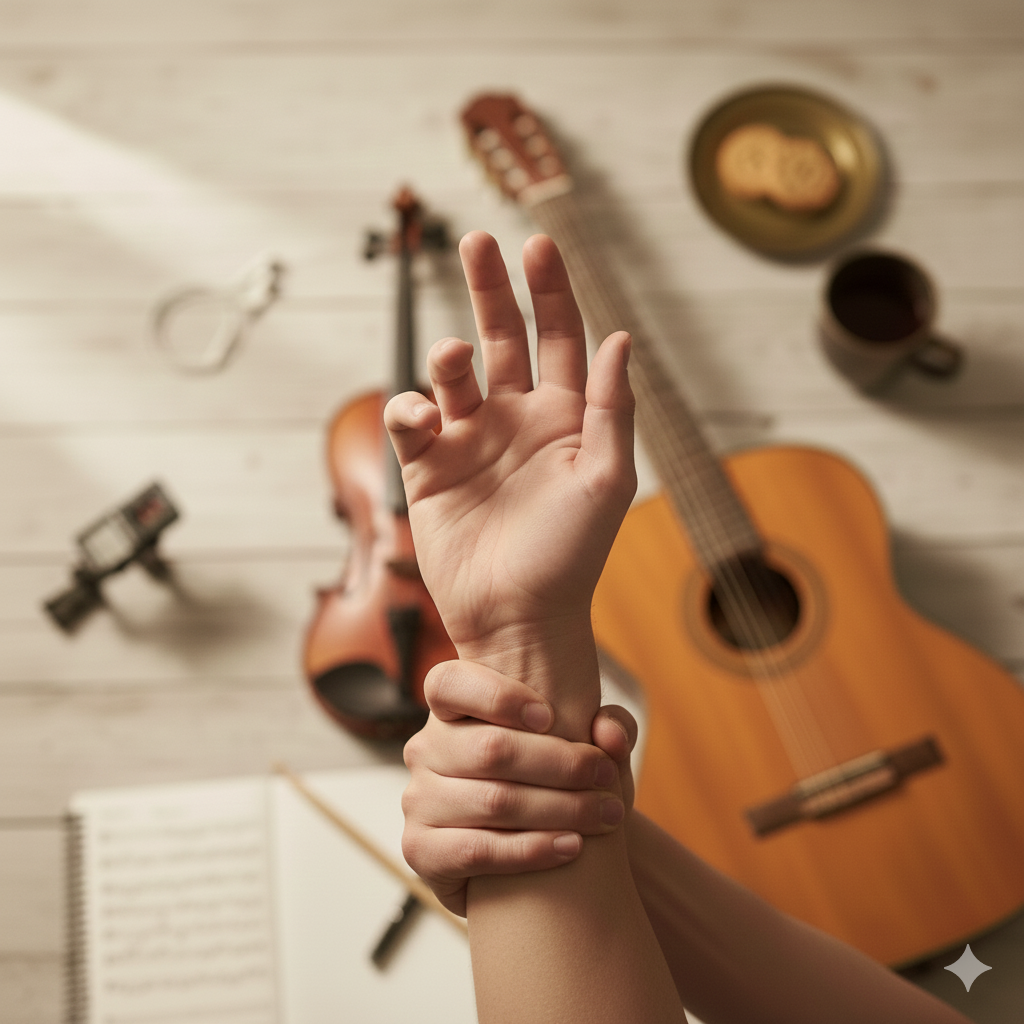
One of the hardest parts of being a multi-instrument musician is the mental switch. The way you use your hands on violin is totally different from guitar. Drums use completely different motor skills. Bass requires different posture and finger strength.
To transition smoothly from one instrument to the next, try a quick “reset routine”:
- Put instrument 1 away fully
- Take three slow breaths
- Review the goal for the next instrument
- Start with a warm-up
This doesn’t take more than 30 seconds, but it signals your brain to switch tasks. It also prevents you from carrying frustration from one instrument to the next.
Tip 6: Track Your Progress (This Matters More Than You Think)
Tracking music practice routine progress isn’t about perfection. It’s about the small wins. When you’re a multi instrument musician, it’s easy to feel like you’re not improving because your attention is spread out. A simple log or tracker can fix that.
Try logging:
- What you practiced
- How long you practiced
- What felt easier
- What still needs work
- One win from the session
After a month, you’ll be shocked at how much progress you’ve made. Where you track these things is up to you, but some simple ones I’d recommend are:
- Google Docs
- Notion
- Your phone
- A printed practice log (which I sell as a downloadable, by the way)
Tracking makes your growth measurable, and measurable growth keeps you motivated. Track your practice progress with my downloadable practice logs made for you HERE
Tip 7: Set a Weekly “Focus Rotation”
Here’s a strategy most musicians don’t use: weekly rotation.
Instead of giving each instrument equal daily time, try giving one instrument extra focus each week. This works especially for musicians with no set primary instrument, wanting to learn multiple at fairly the same pace.
Week 1: Violin heavy
Week 2: Guitar heavy
Week 3: Drums heavy
Week 4: Bass heavy
You still practice the others lightly, but one gets the spotlight. This helps you:
- Break plateaus faster
- Stay excited
- Not burn out on repetition
- Continue growing all year
And it keeps every instrument in progress without overwhelming you.
Tip 8: Protect Your Physical Health
When you juggle multiple instruments, your body gets tired faster than you think.
Violin works your shoulders and neck.
Guitar and bass stress your fingers and wrists.
Drums use your entire upper body and core.
To play safely:
- Stretch before and after practice
- Keep good posture
- Stop when something feels sharp or painful
- Build in rest days
- Switch instruments before you strain one area
With multiple instruments, injury prevention matters even more. Take it seriously now, and your future self will thank you.
Tip 9: Keep Practice Fun
If you’re practicing multiple instruments, it’s probably because you love music. Don’t lose that.
Between warm-ups and technique and goal work, make sure you also:
- Learn songs you enjoy
- Play with friends
- Jam casually
- Try improvising
- Explore different genres
- Learn riffs or rhythms just because they sound cool
Fun keeps you motivated. Motivation keeps you consistent. And consistency is how you actually improve.

Tip 10: Build a Routine That Fits Your Life (Not Someone Else’s)
Every musician is different. Your music practice routine should match:
- Your school schedule
- Your energy levels
- Your goals
- Your instruments
- Your access to space/equipment
- Your motivation style
Some musicians practice best in the morning. Others at night. Some need daily structure. Others need weekly flexibility. Some need quiet alone time. Others thrive playing with people. There’s no “right” way—just the way that keeps you improving.
Try answering these questions (your answers build your routine):
- When do I have the most mental energy?
- When do I have the most access to space or quiet?
- How much time can I reliably practice each day?
- Do I prefer long sessions or short bursts?
- What makes practice feel enjoyable instead of stressful?
Final Thoughts: You Don’t Need to Be Perfect—Just Consistent
Learning multiple instruments isn’t chaotic. It’s strategic. It’s creative. And honestly, it’s one of the coolest parts of being a young musician.
You don’t need hours of practice.
You don’t need professional-level training.
You don’t need to “master” one instrument before touching another.
You just need a practice routine that fits who you are right now.
Wondering how to improve your practicing in the little time you have? Check out the “5 Practice Habits Every Violinist Should Know” blog post HERE.
Want more tips and tricks for your music journey? Sign up for our newsletter!