If you’re thinking about learning violin, one of the first questions that probably comes to mind is how much does a violin cost? In this post, we’ll go over everything that goes into violin price.
At first the answer might seem confusing. If you search online you’ll quickly find violins for sale ranging from under $100 to several thousand dollars. Meanwhile, music stores often recommend instruments that cost a few hundred dollars or more.
Because of that wide range, many beginners aren’t sure what violin price actually makes sense.
Fortunately for us, the reality is much simpler than it first appears. While violin prices can vary dramatically, beginners usually don’t need a professional instrument to get started. Instead the goal is to find a violin that is reliable, comfortable to play, and capable of producing a clear sound.
In other words, the best beginner violin isn’t necessarily the most expensive one. It’s the instrument that allows you to learn good technique without constantly fighting the setup or sound quality.
In this guide we’ll walk through everything beginners should know about violin price ranges, including:
- The realistic cost of beginner violins
- Why some violins are more expensive than others
- Whether renting or buying makes more sense
- What equipment is usually included
- How much violin beginners should actually plan to spend
By the end of this article, you’ll have a much clearer understanding of how much a violin costs, and you’ll feel more confident when comparing the many violins for sale you may encounter.
How Much Does a Violin Cost for Beginners?
Generally speaking, beginner violins cost between $200 and $600.
Although that number may surprise some people at first, this price range usually reflects instruments that are properly built and set up for learning. Violins in this range tend to stay in tune better and produce a more consistent sound.
Most beginner instruments are also sold in a violin outfit, which means they come with the basic equipment needed to start playing.
Typically, this includes:
- A violin
- A violin bow
- A protective case
- Rosin
Sometimes additional accessories are included as well, like how some beginner outfits also contain a shoulder rest or extra strings.
It is important to remember that not all violins fall neatly within this range. In fact, when browsing violins for sale, you’ll likely see instruments in several different price categories.
Let’s look at what those price levels usually mean.
Violins Under $200
First, you’ll probably notice many extremely low-cost violins available online. These instruments often appear on large retail websites and marketplaces, and they can look appealing because of the low price.
Though that is true, these instruments often come with several potential drawbacks.
Lower-cost violins frequently have:
- Poor string quality
- Unstable tuning pegs
- Weak bridge setup
- Thin or scratchy tone
As a result, beginners sometimes struggle more than necessary when learning on these instruments. Even simple tasks like tuning can become frustrating.
That doesn’t mean every inexpensive violin is unusable, but even so teachers often recommend avoiding the absolute lowest violin price options when possible.
Violins Between $200 and $600
Next, we reach what many teachers consider the best beginner price range.
Violins within this range usually offer a much better playing experience, and are more likely to be bought in a music shop.
Because of that, these violins often:
- Stay in tune more reliably
- Produce a fuller tone
- Feel more comfortable to play
For beginners, those improvements can make a huge difference. Instead of fighting the instrument, students can focus on developing good posture, bow control, and sound production.
When searching for violins for sale, this is the range where many solid beginner options appear.
Violins Between $600 and $2,000
Instruments above $600 are often considered intermediate violins.
These violins may use higher quality tonewoods and better craftsmanship. As a result, they often produce a richer, more complex sound.
Typically beginners don’t need this level of instrument right away. While these violins can certainly sound beautiful, a well-made, lower-price beginner violin is usually more than capable of supporting the early stages of learning.
Eventually, many students upgrade after a few years of playing. Until then, a solid beginner instrument is usually more than enough.
Why Do Violins Vary So Much in Price?
If you’ve been looking at violins for sale, you’ve probably noticed how dramatically prices can change.
In fact, two violins may look nearly identical, while one is $2,000 and the other is $20,000.
So why does that happen?
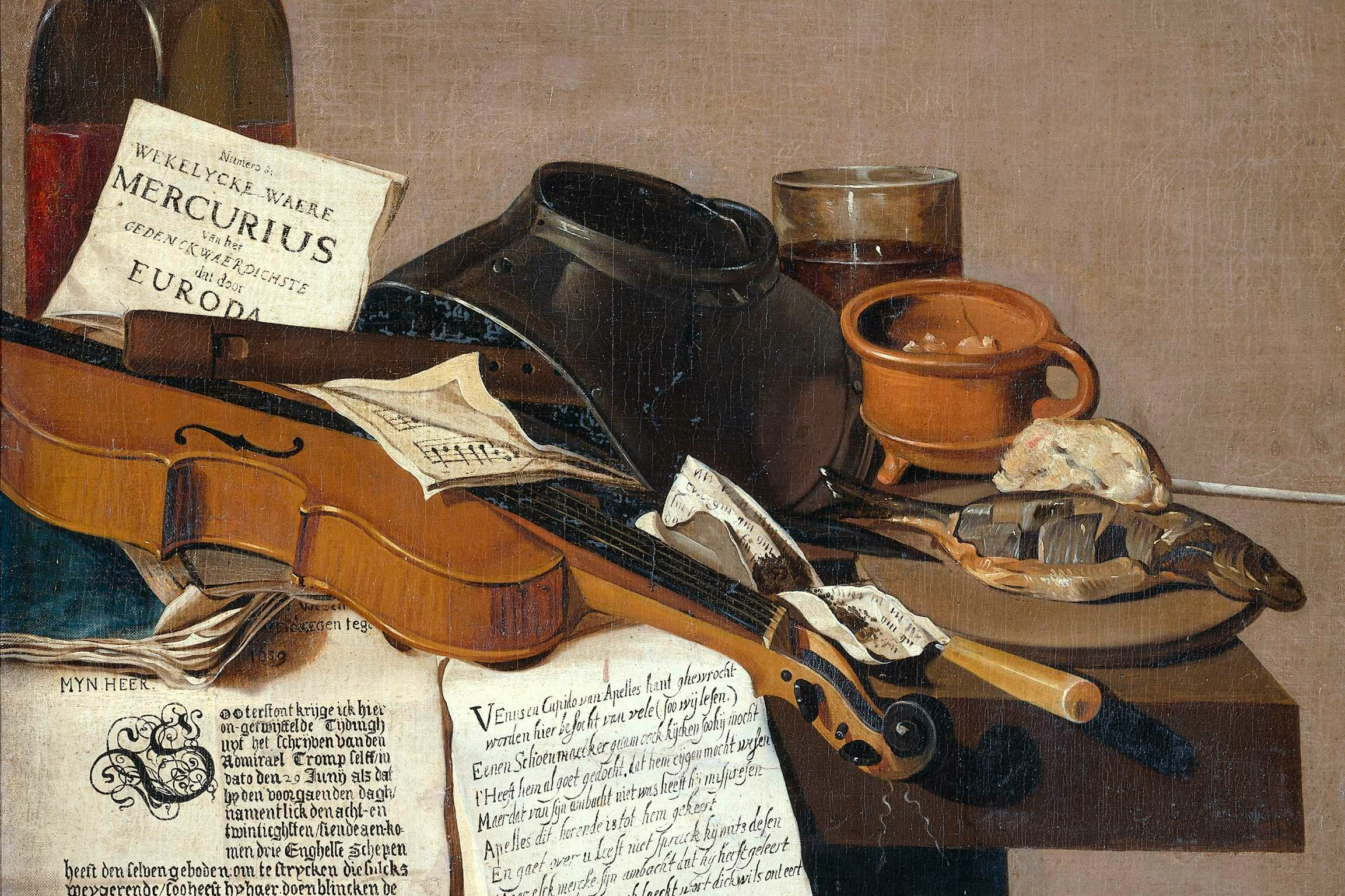
Several key factors influence the final violin price. This can include the materials used, craftsmanship, age, and rarity.
Materials and Age
First of all, the materials used to build a violin play a major role in its cost. This can include the wood and varnish type. Skilled luthiers (string instrument makers/repairers) know what types of wood and varnish will produce the richest sound, and how to shape and apply them to create a quality instrument.
Different types of wood vary in density, stiffness, and resonance (all affecting how the instrument vibrates and how sound gets through it), making the selection of the right type very important. Older, aged wood is said to produce a warmer tone because of complex wood aging, though this is not always true and older does not automatically make a violin better sounding.
It can, however, make it more expensive. Besides sound quality, older materials mean the violin is most likely more rare, made by a skilled luthier (older violins weren’t mass-produced in factories), and has more cultural significance. All of these factors combined can rack up the violin price.
Traditionally, violins are made from specific types of wood chosen for their acoustic properties. For example:
- The top plate is usually made from spruce
- The back and sides are typically maple
- The fingerboard is usually ebony
Higher-quality woods are carefully selected and aged, which can increase the cost. Meanwhile, lower-cost violins may use laminated wood or less carefully selected materials. This being said, because wood greatly affects sound quality, this difference often contributes to variations in violin price.
Violin Craftsmanship and Instrument Rarity
Another major factor is the level of craftsmanship involved.
Some violins are handcrafted by professional luthiers. These makers spend many hours shaping, carving, and assembling each instrument.
Naturally, this process requires a great deal of skill and time. Luthier credibility and authenticity is also a factor. The more renowned a luthier is, and the more selective and limited their supply is, the higher the cost of their instruments.
A great example of this is a stradivarius violin. Most valued at around $10 million to $20 million, stradivarius violins are considered the most famous, sought after, and expensive violins in the world. Made by Antonio Stradivari in the 1700s, there are only a couple hundred violins made by him that exist today. He was a renowned luthier (some say the best), and the age and rarity of his pieces add to their cost.
On the other hand, many beginner violins are produced in factories using standardized processes. This makes them common, modern, and poorer quality than hand-crafted instruments. So while factory instruments can still be good, they typically cost less and are lower quality because they are produced more quickly.
How Else Can Violins and Violin Price Differ?
Perhaps one of the most overlooked factors in violin price is the setup.
Even a decent violin can become difficult to play if the setup is poor. Setup refers to adjustments that make the instrument playable and comfortable.
These adjustments include:
- Bridge positioning
- String height
- Peg fitting
- Soundpost placement
Music shops typically perform these adjustments before selling an instrument. Consequently, violins purchased from reputable shops often cost more than those ordered online.
However, the improved playability often makes the higher price worthwhile.
Accessories Included
Finally, the included accessories can also affect the total cost.
Many beginner outfits include essential items such as bows, cases, and rosin. Meanwhile, some packages also include shoulder rests or cleaning cloths.
Therefore, when comparing violins for sale, it’s helpful to look at the entire package rather than focusing only on the violin itself.
Should You Rent or Buy a Violin?
Another important decision beginners face is whether they should rent a violin or purchase one outright. Both options have advantages. The best choice often depends on personal circumstances.
I will give a short breakdown here, but if you want a more indepth answer on renting and buying violins, check out my blog post “Essentials You Need For Your First Violin Lesson”.
Renting a Violin Breakdown
For many beginners, renting is a practical starting point.
Rental programs typically allow students to pay a small monthly fee in exchange for using a violin. In addition, maintenance and adjustments are often included.
Some benefits of renting include:
- Lower upfront cost
- Easy instrument upgrades
- Maintenance support
Furthermore, many rental programs allow students to apply rental payments toward eventually purchasing the instrument.
Because of these benefits, renting can be especially helpful for younger students who may need to change instrument sizes.
Buying a Violin
On the other hand, buying a violin may make more sense in certain situations.
For example, purchasing an instrument can be worthwhile if:
- The student is ready for a full-size violin
- A good beginner violin is available locally
- Rental programs are limited
Buying a violin is more of a commitment, so lots of students usually rent smaller sizes until they are ready for a full size and are serious about continuing their music learning. Keep in mind when buying, it’s usually best to purchase from a reputable shop. Although you may see cheaper violins for sale online, instruments from music stores are often set up more carefully.
As a result, they tend to provide a better learning experience.
What Comes With a Beginner Violin?
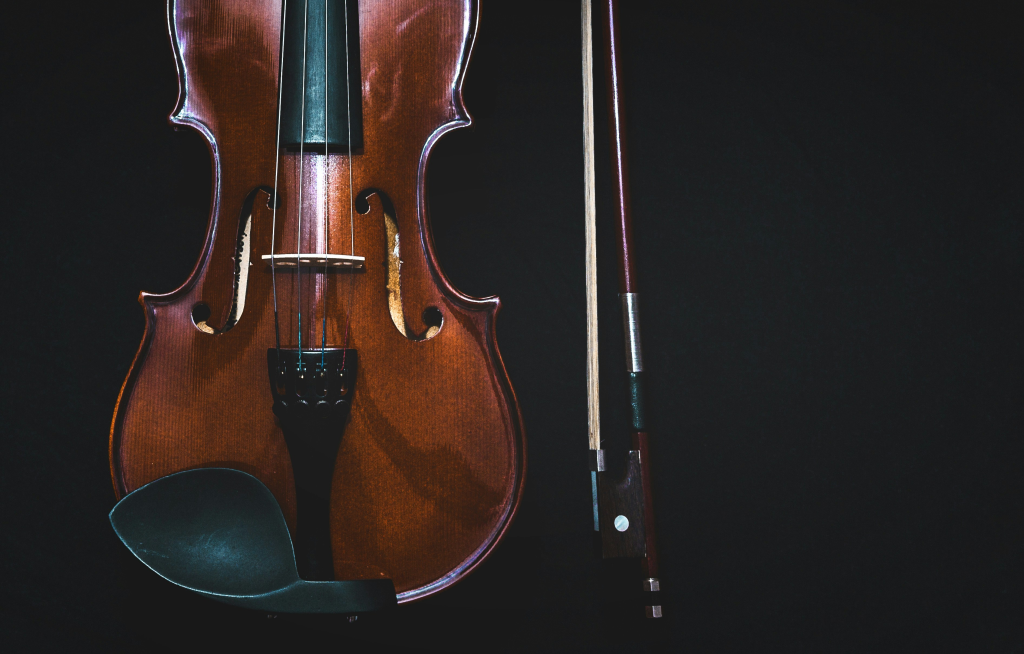
Most beginner violins are sold as outfits, meaning they include the basic tools needed to start playing right away.
Let’s look at the items that are usually included.
The Violin
Of course, the violin itself is the most important part of the outfit.
Violins come in multiple sizes, particularly for younger students. Therefore, it’s important to select the correct size to ensure comfortable playing.
A properly sized violin allows students to maintain good posture and reach the notes more easily.
Need a refresher on the parts of a violin? Read “Parts of a Violin: Your Violin Anatomy Breakdown”.
The Bow
Next, every violin outfit includes a bow.
The bow, created from horsehair suspended on a wooden shaft, creates sound by drawing the hair across the strings. Beginner bows are often made from fiberglass or brazilwood, which keeps the cost reasonable while still providing good durability.
Violin bow price, like the violins themselves, varies based on material, craft, and quality.
Pricing Breakdown:
- Student/Beginner Bows: $30-$300
- Intermediate: $300-$1,000
- Advanced: $1,000-$5,000
- Professional: $5,000-$15,000+
The Case
A protective case is also included with most beginner instruments. Cases can either be a hard case or soft case, come in different colors, or have different types of straps, locks, and pockets. All these factors can affect the price of cases. A pretty generic, suitable case would be around $50-$200.
The case helps protect the violin from damage during storage and travel. In addition, many cases include small compartments for accessories.
Rosin
Finally, rosin is an essential item that beginners sometimes overlook. Rosin is applied to the bow hair to create friction against the strings. Without rosin, the bow will simply slide across the strings without producing much sound.
Good rosin can be found for around $15-$40, while other higher-quality types can range more from $50-$100. Cheaper rosin can be the result of less quality materials, making for a dustier application or lower sound quality as a result, so just be mindful when picking out your own rosin.
When comparing violins for sale, checking whether these items are included can help you better understand the total violin price.
Need recommendations on rosin, cases, or other violin materials? Visit my recommended materials page here to see my favorites.
How Much Should a Beginner Spend on a Violin?
At this point you may still be wondering what a realistic beginner violin budget looks like.
Generally speaking, many violin teachers recommend spending between $250 and $500 for a first violin. This will also be different if you are deciding to rent a violin.
This price range typically provides a good balance between affordability and playability.
For instance, violins within this range are usually:
- Easier to tune
- More comfortable to hold
- More consistent in sound quality
Beware that extremely low-cost instruments sometimes create unnecessary challenges for beginners, but you should find a healthy balance.
Spending thousands of dollars on a first violin is usually unnecessary. Many students use their beginner instruments for several years before upgrading.
Ultimately, the goal isn’t to find the most expensive violin available. Instead, the goal is to find an instrument that supports consistent learning and practice.
Hidden and Additional Costs of Learning Violin
Although the violin itself is the main purchase, there are a few additional costs beginners should keep in mind. Fortunately, most of these expenses are manageable.
Violin Strings
Violin strings gradually wear out with use. Therefore, they typically need to be replaced every 6–12 months depending on how often the instrument is played. Strings can range from $30-$150+.
When you are a beginner violinist, especially if you are renting your violin, replacing your strings isn’t as much of a problem because you generally aren’t going to be practicing 2 hours a day like more advanced students. That being said, just keep an eye on your strings and take note if you notice them unravelling our your sound quality changing,
Higher quality violin strings can improve tone, but beginners usually start with basic options.
Maintenance
Occasionally, a violin may need small adjustments.
For example, seasonal humidity changes can affect the wood and require minor setup tweaks. Sometimes the sound post needs an adjustment, or you get a nasty nick on your violin and want it fixed up. Fortunately, most adjustments are quick and inexpensive.
Accessories
As violin students continue learning, they often add a few helpful accessories.
Common additions include:
- Shoulder rests
- Music stands
- Cleaning cloths
- Extra rosin
Although these items are not strictly required at the beginning, they can make violin practice more comfortable.
Violin Lessons
Finally, lessons are often the most valuable investment for beginners. If you are searching for lessons, feel free to contact me to check for lesson availability.
A good violin teacher can help students develop correct technique from the start. In addition, lessons provide guidance that prevents frustration and encourages steady progress.
When people ask “how much does a violin cost”, they sometimes focus only on the instrument itself. However, learning an instrument is really a combination of tools, instruction, and consistent practice.
Learn more about different violin teaching methods in the blog “Common Violin Teaching Methods”.
How to Choose the Right Beginner Violin
When comparing the many violins for sale, it’s easy to feel overwhelmed.
Here are a few simple guidelines can make the process much easier.
First, try to purchase from a reputable music shop whenever possible. Shops typically ensure that instruments are properly adjusted before being sold.
Second, focus on playability rather than appearance. Decorative details rarely affect how a violin actually sounds.
Finally, don’t hesitate to ask questions. Music shops and teachers often enjoy helping beginners choose their first instrument.
Remember, the goal is not to find the perfect violin immediately, it’s simply to find a reliable instrument that helps you begin learning comfortably.
FAQs About Violin Price
Is $100 good for a violin?
While some instruments exist at this price, many have setup or durability issues. Beginners often have a better experience with violins priced between $200 and $500.
Why are violins so expensive?
Higher prices usually reflect better materials, craftsmanship, and setup adjustments. Handmade violins can require many hours of skilled work.
Do beginners need an expensive violin?
No. Most beginners can learn successfully on a well-made student instrument within the $250–$500 range.
Should beginners rent or buy?
Both options work. Renting is helpful for beginners who want flexibility, while buying may be worthwhile for long-term players. I personally would recommend renting until you are ready for a full-size violin.
Final Thoughts
At first, the question of how much does a violin cost can seem surprisingly complicated. There are countless violins for sale online and in music shops, and prices can vary dramatically.
However, beginners don’t need the most expensive instrument available. A reliable violin within the $250–$500 price range is usually more than enough to begin learning comfortably.
The right violin should encourage consistent practice and steady improvement. And once you have an instrument that works well, the real progress comes from patience, guidance, and time spent playing.
Like every violinist before you, the journey starts with that very first note.