Why Having the Right Violin Materials Matter
Starting violin lessons is an exciting decision, and it often comes with a mix of motivation, curiosity, and just a little anxiety. Parents want to support their child without overspending. Adult beginners want to do things “the right way” without feeling foolish. Students want to sound good quickly and avoid frustration. All of those feelings are completely normal.
One misconception around violin lessons is that you need a lot of equipment to get started, or that better gear automatically leads to better playing. Neither is completely true. Starting violin lessons is an investment, yes, but you can just start out with the basic materials and work your way on from there.
So what are the must-have materials for starting violin lessons?
- Violin (correct size)
- Bow
- Case
- Shoulder rest or sponge
- Rosin
- Teacher-approved music book
- Music stand
Having the right materials for your level makes learning easier, more comfortable, and more enjoyable. Poor setup, missing accessories, or the wrong size violin can quietly slow progress and create bad habits before a student even realizes what’s happening.
In this guide we will go over the essential materials for starting violin lessons, recommendations, and other additional items you might consider investing in to improve your playing and practice. Whether you’re enrolling a young child, returning to the violin after years away, or starting violin lessons as an adult, this page gives you a clear, confident starting point.
Violin Lesson Essentials (Must-Have from Day One)
The Violin
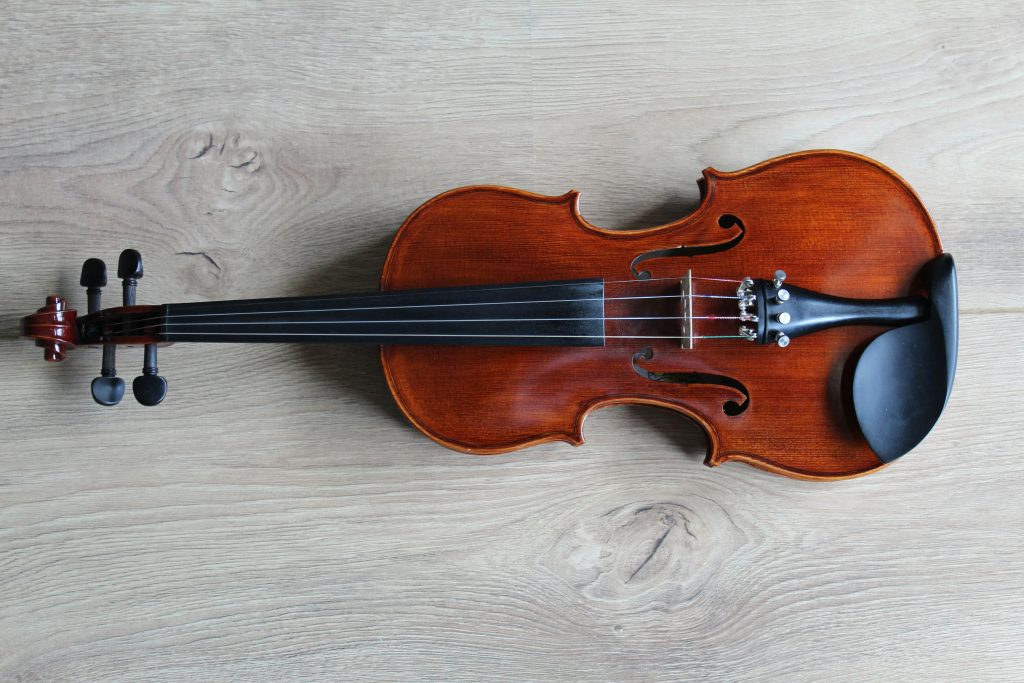
To start violin lessons, you will need a violin (of course). The violin is the centerpiece of your setup, but it does not need to be high-end to be effective, especially in the beginning. In fact, beginner violins are designed to be more forgiving, durable, and stable. You want to focus most on the right size, and whether you want to rent or buy your instrument.
Read “Parts of a Violin: Your Violin Anatomy Breakdown” to understand more about how the violin works, and what each part does.
Why Proper Sizing Matters More Than Brand
Violins come in multiple sizes, ranging from 1/16 to 4/4. Usually in their teenage years, violinists will be grown enough to get a full size (though it will depend on the player).
Two children of the same age may need different sizes.This is because sizing is typically based on arm length rather than age. This is scaled by having the player put their violin under their chin like usual, and stretch their left arm out as far as it can go. If it reaches too far past the scroll (end of the violin), they are ready to size up.
Playing on the wrong size violin can cause:
- Poor posture
- Shoulder and wrist tension
- Intonation issues
- Fatigue even during short practice sessions
Common violin sizes include:
- 1/16, 1/10, 1/8 for very young beginners
- 1/4, 1/2, 3/4 for elementary through early teen students
- Full size (4/4) for most teens and adults
If you’re unsure, do not guess. A teacher or local music shop can size a student accurately in minutes.
Rent vs. Buy
This is one of the most common questions families ask when starting violin lessons. Usually, renting a violin is often the best choice for beginners, especially children.
Benefits of renting:
- Lower upfront cost
- Easy size exchanges as students grow
- Maintenance and repairs usually included
- Less pressure if the student decides not to continue
- Usually comes with a rental bow and case
Buying a violin can make sense for:
- Adult beginners
- Older students close to full size
- Families committed long-term
- Situations where renting isn’t available
There is no “wrong” choice here, but renting removes many early barriers and risks. Many professional violinists started on rented instruments.
Your teacher’s recommendation matters. Teachers often know which local shops provide reliable beginner instruments and setups. In your first lessons, teachers will also go over things like what teaching methods they use, and what your violin journey will look like. Read “What to Expect at Your First Violin Lesson” for more insight on how violin lessons work.
The Bow
A violin bow is a piece of wood or carbon fiber with horsehair (yes, horsehair) stretched across its ends. It’s used to create sound by causing friction on the strings of the violin when moved across them. Most beginner violins come with a bow, and that is completely sufficient.
A beginner bow should:
- Feel balanced in the hand
- Have straight wood or shaft
- Hold rosin evenly
- Respond predictably
At this stage, sound quality depends far more on bow technique than on the bow itself. Upgrading bows to early rarely improves results. Basic bow technique is something heavily focused on in the early months of learning the violin, and as such students just need a basic bow.
Avoid the temptation to buy a “professional” bow for a beginner. Those upgrades are more meaningful later, not necessarily now when students don’t even know how to correctly hold one.
The Case
A violin case protects your instrument, makes transportation safe and simple, and comes in different materials and colors. The case is designed to hold your violin as well as your bow, and most are able to hold a shoulder rest in them as well. Some cases even have slots that music can be stored in, or straps that make it easier to carry. There are hard cases or soft cases. Most rental violins usually come with a soft, black case.
Hard cases:
- Offer better impact protection
- Are ideal for commuting, school programs, or travel
- Typically last longer
Soft cases:
- Lighter and often less expensive
- Suitable for short trips or home storage
- Offer less protection overall
For younger students, backpack-style straps are especially helpful. They reduce the risk of dropping the case and make it easier to carry alongside school bags.
A good case protects your investment and your peace of mind.
Comfort & Setup Materials
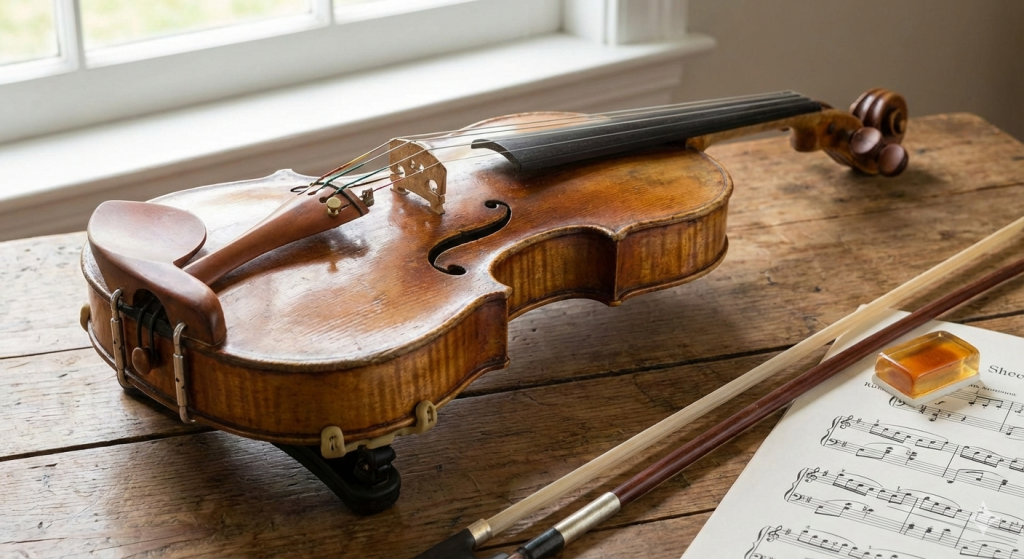
These items support healthy posture, prevent strain, and make playing more comfortable—especially during the first months of violin lessons.
Shoulder Rest or Sponge
There are typical, adjustable shoulder rests, or some people (especially beginners) prefer using a sponge.
The shoulder rest is one of the most important—and most misunderstood—violin accessories.
Its purpose is not to “hold the violin up.” Its purpose is to:
- Help the violin rest securely
- Reduce tension in the neck and shoulders
- Allow the left hand to move freely
- Support balanced posture
Without proper support, beginners often clamp the violin with their neck or shoulder, which creates tension and limits progress. Most if not all violin players use a shoulder rest. The type, height, and exact positioning on the violin depends on the preference of the player, so this is something to play around with until you find what works best for you.
Adjustable shoulder rests:
- Offer stability and customization
- Can be adjusted for height and angle
- Are commonly used by older students and adults
Sponge rests:
- Simple and affordable
- Often used for young beginners
- Lightweight and flexible
There is no universal “best” option. Body shape, neck length, and comfort all matter. Many teachers prefer to help students choose and adjust their shoulder rest during lessons.
The right setup makes violin lessons easier, more comfortable, and more sustainable.
Sound & Technique Tools
These tools support tone production, consistency, and good habits from the very beginning.
Rosin
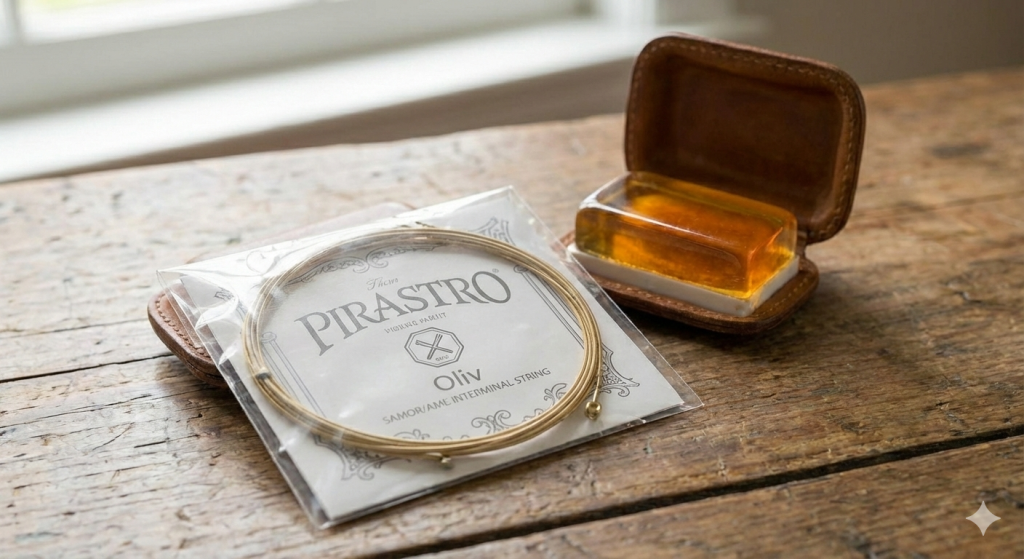
What is violin rosin? It is hardened resin derived from pine tree sap, used on your violin bow. Rosin creates friction between the bow hair and the strings, allowing the bow hair to stick, catch, and move across them to create sound.
Without rosin, the bow will have a harder time sliding across the strings evenly and securely, and can affect the tone of your instrument.
Light vs. Dark Rosin
- Light rosin is harder and commonly used in warmer climates
- Dark rosin is softer and stickier, often used in cooler climates
For beginners, the difference is subtle. Most beginner rosins are designed to work well in a variety of conditions.
Apply rosin lightly. Too much rosin causes dust buildup and scratchy tone. Your teacher can show you proper application during early lessons.
Extra Strings
Violin strings break, sometimes unexpectedly, and it happens more often than you think. Having good quality strings, knowing when to replace them, and having backups are all good ideas. Violin students, especially more advanced players or those performing regularly, should keep at least one spare set of strings available.
Strings can break due to:
- Normal wear
- Temperature changes
- Accidental bumps
- Tuning mistakes
If you’ve recently replaced your strings and don’t yet have a new backup set, save your old strings. In an emergency, you can reinstall an old string temporarily to get through a performance. This happens more often than people expect.
It is recommended that you replace your violin strings about every 6-12 months, though it is hard to put an exact timeline on it. Strings lose sound quality over time, but how quickly that happens depends on how frequently you practice.
Practice & Learning Materials
Violin lessons are only part of the learning process. Progress happens between lessons, during focused, intentional practice. These materials support that work.

Music Books and Method Books
There is no single correct way to learn violin. Different teachers use different methods based on their training, experience, and student needs.
Common approaches include:
- Suzuki method
- Traditional note-reading methods
- Hybrid or customized curricula
- Galamian-influenced techniques
Teacher preference matters. Before purchasing books, ask your teacher which method they use. They will tell you exactly which books to buy and when.
Buying books before choosing a teacher often leads to unused materials.
To learn more about violin teaching methods, read “Common Violin Teaching Methods.”
Music Stand
There are more heavy-duty, durable stands for at home or portable, collapsable ones for back and forth travel. A music stand may seem optional, but it plays a key role in posture and focus.
Practicing with music on a chair, bed, or table encourages:
- Slouching
- Neck strain
- Poor bow angles
A music stand:
- Keeps music at eye level
- Encourages upright posture
- Makes reading easier and more consistent
Portable stands work well for small spaces and travel. Heavier stands are ideal for a dedicated practice area at home.
Practice Notebook
A practice notebook is a simple but powerful learning tool.
It helps students:
- Track weekly assignments
- Write down teacher instructions
- Set practice goals
- Reflect on progress
For parents, it provides clarity and structure. For adult beginners, it builds accountability and momentum.
Helpful Add-Ons (Not Required, but Commonly Used)
These items are not essential for lesson one, but many teachers recommend them early in the learning process.
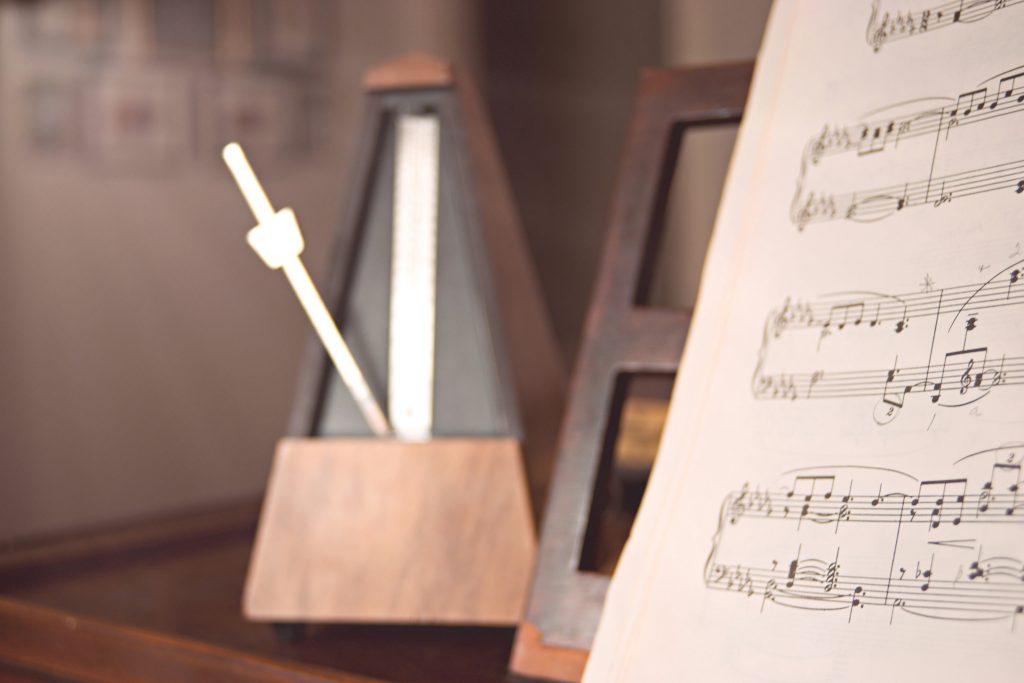
Metronome and Tuner
Timing and pitch awareness matter from the get-go of violin lessons.
A metronome:
- Encourages steady rhythm
- Prevents rushing
- Supports slow, focused practice
A tuner:
- Helps beginners learn pitch placement
- Builds ear training
- Supports intonation development
Physical devices work well, but smartphone apps are usually sufficient for beginners. What matters most is consistent use, not the format.
Violin Mute
A mute is attached to the bridge of the violin to reduce its vibrations, reducing the violin’s volume.
This can be helpful for:
- Apartment living
- Late-night practice
- Noise-sensitive households
- Sometimes required in orchestral music
A mute changes the sound of the violin slightly, so it shouldn’t be used when it is not needed. A student should get to know how their violin sounds without having a mute on it. If being used to make practice quieter, think of it as a tool for convenience, not a permanent solution.
Finger Tape
Finger tape is sometimes used to help beginners learn finger placement. It is put under the strings on the fingerboard so students can see exactly where their fingers should land. Some teachers use black, which is more incognito, and some will use colors, often coordinating it with colored markings they make on your music. Lots of times, finger tape is provided and placed on by your teacher.
Important guidelines:
- Use temporarily and remove carefully
- Beware of sticky residue
- Follow teacher guidance
The goal is to develop listening skills and muscle memory—not reliance on visual markers.
What You Don’t Need (Yet)
This section exists to reduce overwhelm and protect your budget.
You do not need:
- Expensive bows
- Multiple violins
- Professional-grade strings
- Advanced accessories
- Decorative or novelty items
These items do not accelerate beginner progress. In some cases, they complicate learning.
Strong foundations come from:
- Proper setup
- Good instruction
- Consistent practice
- Patience
Save upgrades for when your teacher recommends them.
Here’s Another Look At Your Violin Lesson Checklist
Use this checklist to prepare for your first violin lesson.
- Violin (correct size)
- Bow
- Case
- Shoulder rest or sponge
- Rosin
- Teacher-approved music book
- Music stand
That’s all you need to begin.
Where to Buy Your Violin and Supplies
You generally have two options: local music shops or online retailers.
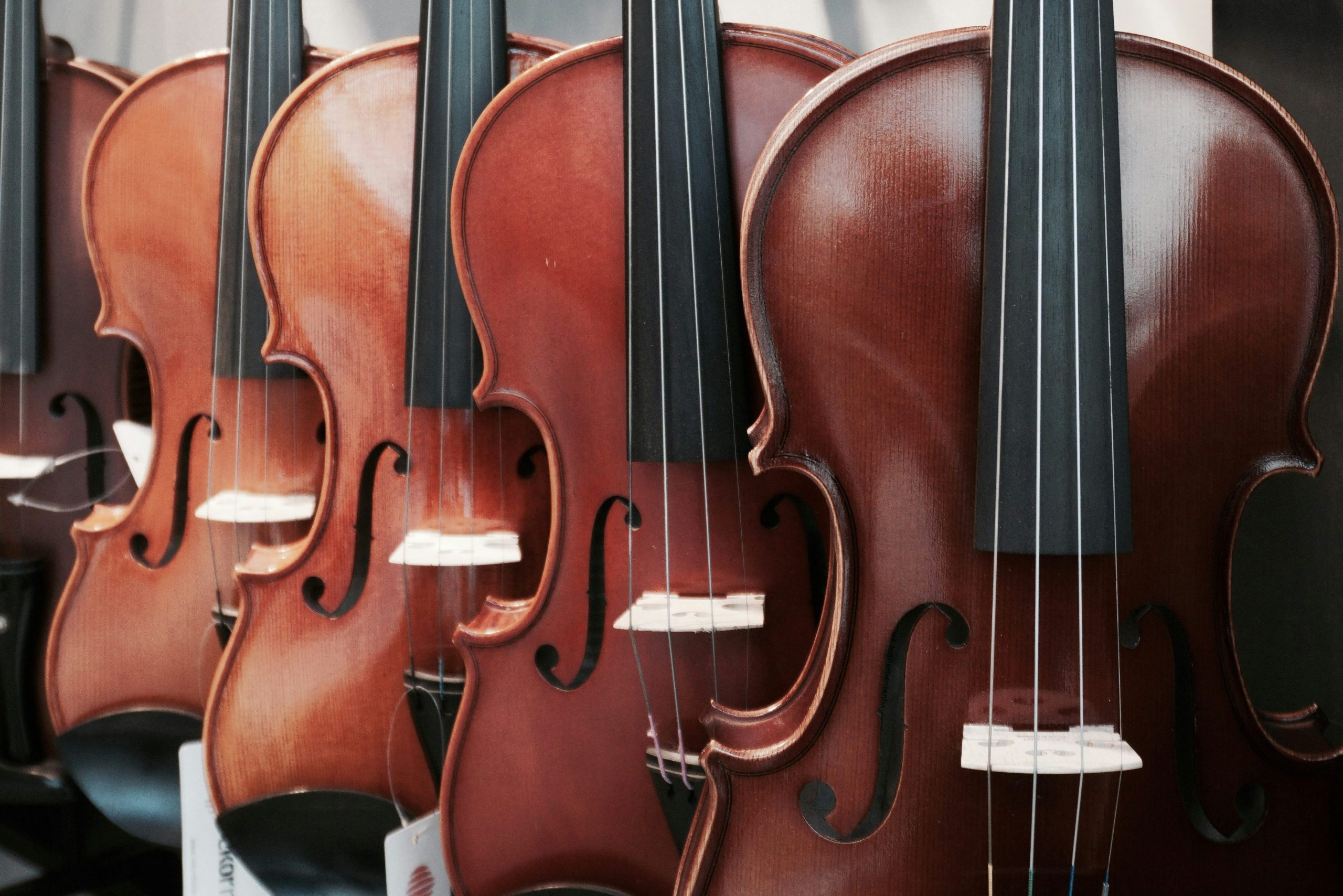
Local Music Shops
Pros:
- Accurate sizing
- Rental programs
- On-site repairs and adjustments
- Familiarity with teacher preferences
Cons:
- Slightly higher cost
Online Options
Pros:
- Convenience
- Wide selection
- Easy price comparison
Cons:
- Quality can vary widely
- Setup issues
- No personalized guidance
Whenever possible, follow your teacher’s recommendation. Many teachers work closely with specific shops that understand beginner needs.
Conclusion
Starting violin lessons is a long-term investment in skill, discipline, and creativity.
You do not need excessive gear.
You do not need expensive accessories.
You do not need to know everything on day one.
You need:
- The right essentials
- A comfortable setup
- Clear instruction
- Consistent practice
Visit our Recommended Materials page for beginner-approved gear